
SJ/C Physician Network - Metro Surgical surgeons are experts in gallbladder surgery
St. Joseph's/Candler Physician Network - Metro Surgical is the largest general surgery practice in the region, and gallbladder removal is one of the most common procedures our surgeons perform.
A cholecystectomy, or gallbladder removal, is usually performed to treat gallstones and the complications they can cause. The gallbladder is a small organ that sits beneath your liver, on the upper right side of your abdomen. It stores bile, a digestive fluid made in the liver.
Why patients come to us
Our eight board-certified, fellowship-trained surgeons remove gallbladders using every available approach, from traditional open surgery to single-incision robotic removal. As part of the St. Joseph's/Candler system, they have access to the most advanced minimally invasive surgical technology in the region, with offices in Savannah, Rincon, Pooler, Richmond Hill and Bluffton.
About the gallbladder and surgery
Gallbladder Symptoms
Gallbladder trouble usually announces itself as pain, though it does not always feel the way people expect.
- Pain on the right side or in the middle of your upper abdomen.
- Pain that is constant, or that gets worse after a heavy meal.
- A feeling of fullness rather than pain.
- Pain felt in your back, or at the tip of your right shoulder blade.
- Nausea, vomiting, fever or chills.
Gallbladder symptoms can look like other health problems. See your healthcare provider to be sure.
When Gallbladder Surgery is Needed
Your surgeon may recommend removing your gallbladder if it:
- Contains gallstones, which are lumps of solid material.
- Is inflamed or infected, a condition called cholecystitis.
- Is cancerous.
Your healthcare provider may have other reasons to recommend the procedure.
Living Without a Gallbladder
- Most people live normally without a gallbladder.
- The gallbladder stores bile, but it is not required for digestion. For most people, removing it has no lasting effect on how they digest food.
- Some people need minor diet adjustments at first, particularly with high-fat meals.
How we remove the gallbladder
The right approach depends on the condition of your gallbladder and on your health history. Your surgeon will walk you through the options and answer your questions before you decide anything.
Robotic Surgery 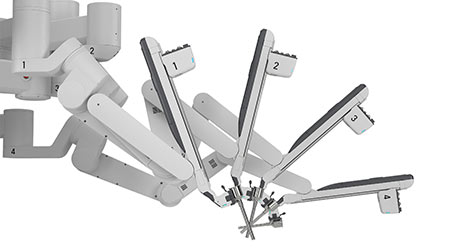
With the da Vinci Robotic Surgical System, your surgeon needs only one incision to remove a gallbladder. Your surgeon sits at a console beside you and operates using tiny instruments, while a camera provides a magnified, high-definition 3D view inside your body. Every hand movement your surgeon makes is translated in real time to bend and rotate the instruments with precision.
Laparoscopic Surgery
This method uses three or four very small incisions and a long, thin tube called a laparoscope, which carries a tiny video camera and surgical tools. Your surgeon operates while watching a monitor, and the gallbladder is removed through one of the incisions.
Open Surgery
One incision, about four to six inches long, is made in the upper right side of your abdomen, and the gallbladder is removed through it. Sometimes a gallbladder turns out to be more diseased than expected, or a surgeon finds another problem during the procedure. When that happens, your surgeon may switch to the open method in order to remove it safely.
Laparoscopic and robotic removal are both less invasive than open surgery. Smaller incisions mean less bleeding and, for most patients, a shorter recovery.
Preparing for surgery
Your surgical team will give you complete instructions before your procedure, but feel free to let us know if you have questions.
Tell your provider if you:
- Are sensitive or allergic to any medication, latex, tape or anesthesia
- Are pregnant or think you may be pregnant
- Have a history of bleeding disorders
- Take blood thinners, aspirin, ibuprofen or anything else that affects clotting
We may ask you to stop certain medications before surgery. Never stop taking a medication unless your provider tells you to.
Follow your instructions for eating and drinking beforehand, and plan to arrive prior to the time you are given. There will be paperwork and questions, and the answers help us keep you safe.
What recovery looks like
- After surgery you will move to the recovery unit, where your blood pressure, pulse and breathing are monitored until you are awake, alert and stable.
- Because most gallbladder removals are minimally invasive, most patients have less pain, a shorter hospital stay and a quicker return to normal life.
- How long you stay depends on the complexity of your surgery. Surgery times and recovery times both vary from patient to patient.
- Mild pain or swelling near the surgical site is normal.
Call your provider right away if you have a fever or chills, nausea or vomiting, bleeding at the incision, or any symptom that worries you.
Contact Metro Surgical
Metro Surgical has a team of experienced surgeons and support staff. We see patients at offices across the region and perform surgeries in Savannah and Pooler.