Hernia repair with our surgeons at St. Joseph's/Candler Physician Network - Metro Surgical
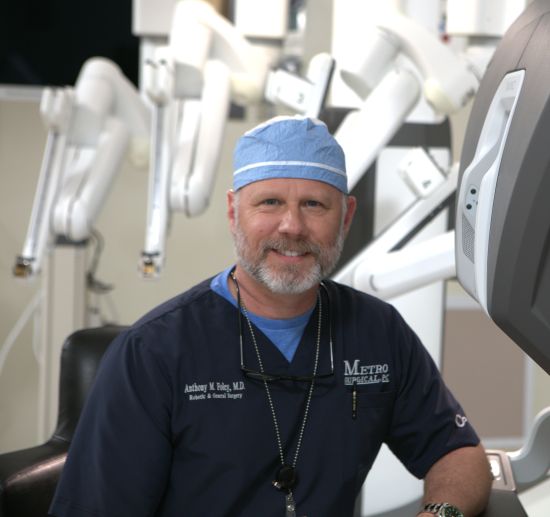
St. Joseph's/Candler Physician Network - Metro Surgical is one of the most experienced hernia-repair practices in southeast Georgia. Two of our surgeons, Dr. Anthony Foley and Dr. N. Santosh Reddy, are Hernia Master Surgeons who operate in the St. Joseph's/Candler Hernia Center of Excellence.
A hernia happens when part of an organ or tissue pushes through a weak spot in the muscle wall around it. Most hernias occur in the abdomen. It is one of the most common surgical conditions in the country, and it is one we treat every day.
Why patients come to us
Metro Surgical is one of the largest single specialty general surgical practices in the region, with locations in Savannah, Pooler, Richmond Hill and Bluffton, South Carolina. Our surgeons repair hernias of every type, size and complexity using every available approach, which means we can take on the difficult cases: large hernias, hernias that have come back after an earlier surgery, and hernias other surgeons have said could not be repaired. Most of our repairs are minimally invasive.
About Hernias
We treat many different types of hernias. Learn more about hernias below.
Hernia Symptoms
- A bulge, pain or swelling in your groin or abdomen.
- Pain or pressure that gets worse when you lift, cough, strain or bend over.
- In the early stages, a bulge you can push back in.
- Heartburn, acid reflux, chest discomfort or trouble swallowing. A hiatal hernia sits inside the body and does not create a visible bulge, so its symptoms can look very different.
Hernia Causes
Almost every hernia comes down to the same combination: an opening or weakness in muscle or tissue, plus pressure that pushes something through it. That pressure can come from:
- Strenuous or heavy lifting
- Chronic coughing
- Constipation
- Repeated vomiting
- Damage from an injury or a previous surgery
- Failure of the abdominal wall to close after pregnancy
- A personal or family history of hernias
Hernias Do Not Go Away on Their Own
- A hernia forms at a tear or gap in the muscle wall, and that opening will not close on its own.
- Surgery is the only way to repair a hernia and restore muscle strength.
- Without treatment, hernias tend to enlarge over time and can lead to emergency surgery.
Types of Hernias We Treat
- Inguinal: Soft tissue pushes through a weak spot in the lower abdominal wall or groin, creating a lump that can grow over time. This is the most common type.
- Hiatal: The stomach pushes up through the diaphragm, the muscle that separates the abdomen from the chest.
- Umbilical: The abdominal wall does not close completely around the navel, and tissue pushes through. Often found in infants, but adults get them too.
- Epigastric: Fat pushes through a weak spot in the abdominal wall between the navel and the breastbone.
- Incisional: Tissue pushes through a surgical wound that did not fully heal. Unlike other hernias, these form at a point of trauma rather than a natural weak spot.
- Femoral: An uncommon hernia that appears in the upper inner thigh or groin. These are more common in women.
How we repair hernias
The right approach depends on the type, size and location of your hernia and on your health history. Your surgeon will walk you through the options and answer your questions before you decide anything.
Laparoscopic Surgery
A camera magnifies the surgical field while your surgeon works with instruments no larger than a pencil. No large incisions, no long hospital stay, and some patients go home the same day. This includes the totally extraperitoneal, or TEP, procedure. 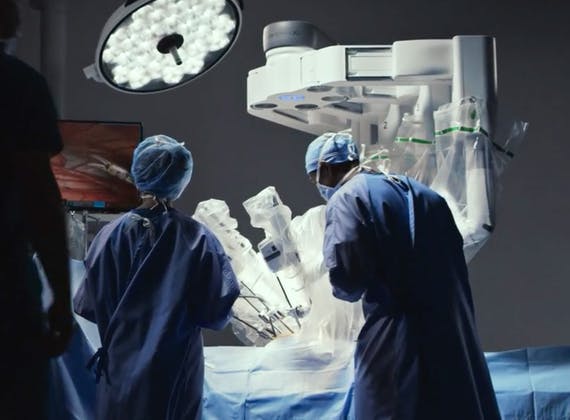
Robotic Surgery
Working from a 3D monitor, your surgeon uses robotic instruments to make the smallest possible incisions. That means less scarring and less recovery time.
Open Surgery
Minimally invasive is not always the best option, and the goal is the best outcome rather than the smallest incision. When open repair is the right call, your surgeon will tell you.
Repair Without Mesh
Many hernia repairs are reinforced with surgical mesh. Our surgeons also perform the Canadian, or Shouldice, repair, which closes the hernia using your own tissue and no prosthetic mesh.
Treating severe hernias
Giant hernias
If your hernia is growing, or you have already had a hernia surgery that did not hold, you may have what is called a giant hernia. Our surgeons treat hernias of every shape, size and type, and a hernia another surgeon has declined to repair is not the end of the conversation.
Abdominal wall reconstruction
A hernia left in place can significantly weaken the abdominal wall over time. Reconstruction rebuilds it by repositioning the muscles of the abdomen and reinforcing the repair with mesh to secure the organs behind it.
Preparing for surgery
Your surgical team will give you complete instructions before your procedure, but feel free to let us know if you have questions.
Tell your provider if you:
- Are sensitive or allergic to any medication, latex, tape or anesthesia
- Are pregnant or think you may be pregnant
- Have a history of bleeding disorders
- Take blood thinners, aspirin, ibuprofen or anything else that affects clotting
We may ask you to stop certain medications before surgery. Never stop taking a medication unless your provider tells you to.
Follow your instructions for eating and drinking beforehand, and plan to arrive prior to the time you are given. There will be paperwork and questions, and the answers help us keep you safe.
What recovery looks like
- After surgery you will move to the recovery unit, where your blood pressure, pulse and breathing are monitored until you are awake, alert and stable.
- Because most of our hernia repairs are minimally invasive, most patients have less pain, a shorter hospital stay and a quicker return to normal life.
- How long you stay depends on the complexity of your surgery. Surgery times and recovery times both vary from patient to patient.
- Mild pain or swelling near the surgical site is normal.
Call your provider right away if you have a fever or chills, nausea or vomiting, bleeding at the incision, or any symptom that worries you.
Contact Metro Surgical
Metro Surgical has a team of experienced surgeons and support staff. We see patients at offices across the region and perform surgeries in Savannah and Pooler.